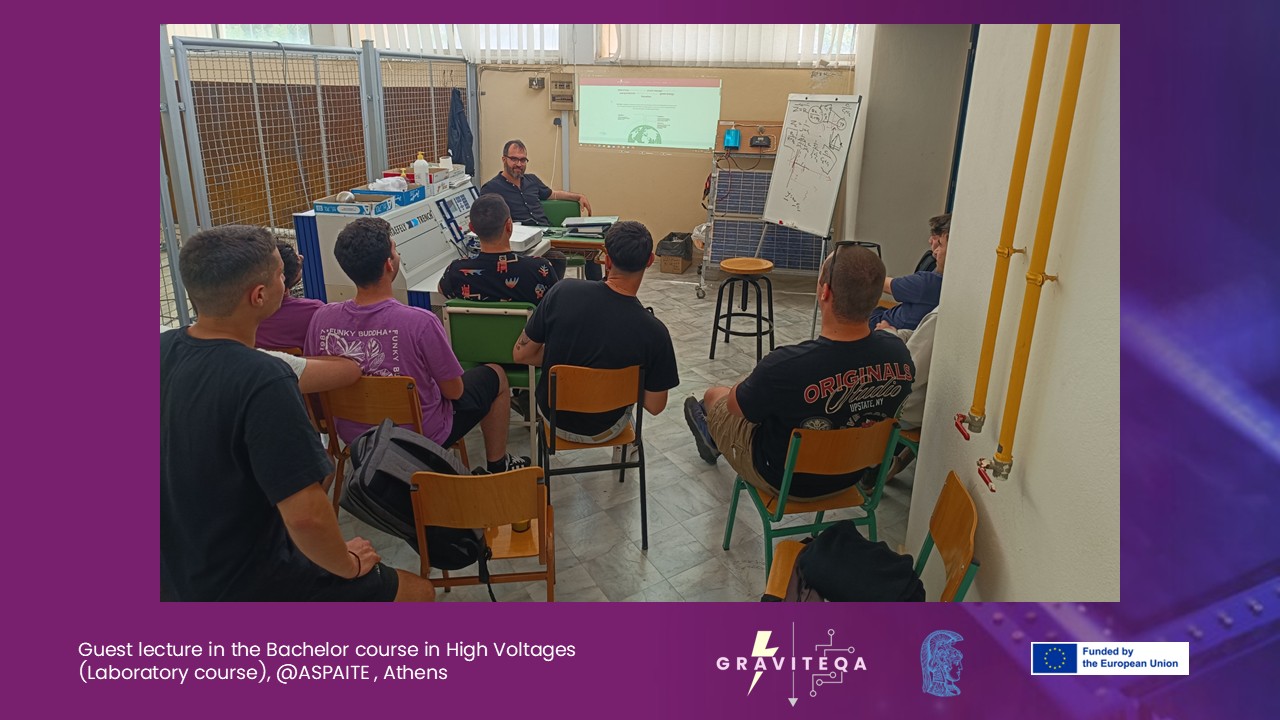
Guest lecture in the Bachelor course in High Voltages (Laboratory course), ASPAITE
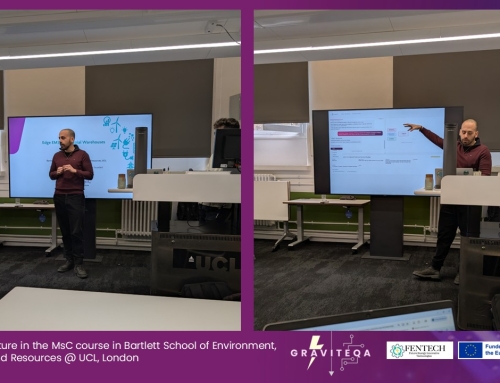
On 22 May 2026, Pavlos Katsivelis from NKUA, the Project Coordinator of the GRAVITEQA Project, delivered a guest lecture in the Bachelor Course High Voltages (Laboratory Course) at the ASPAITE High Voltage Laboratory, attended by approximately 15 undergraduate students.
The lecture focused on the challenges facing modern electricity networks, particularly in relation to energy storage, grid modernization, and the integration of emerging technologies such as quantum computing and artificial intelligence. The session provided students with a valuable introduction to the research and innovation activities being developed within the GRAVITEQA project and encouraged discussion on intelligent energy management and advanced analytics for the energy and building sectors.
Students, who already possessed a solid understanding of high-voltage transmission and distribution systems, demonstrated strong interest in the challenges addressed by GRAVITEQA and the innovative solutions proposed. In particular, they were intrigued by the application of gravitational energy storage, quantum computing, and AI technologies as novel approaches to improving energy reliability, resilience, and circularity across modern electricity networks.
A key topic of discussion was Europe’s ongoing transition toward cleaner and more sustainable energy systems. The audience showed particular interest in the project’s efforts to address sector-coupled electricity grids and green ports through data-driven innovation and advanced computational methodologies.
The presentation provided an overview of the main objectives of the GRAVITEQA project, including demand-side orchestration, renewable energy system planning, distribution grid management, green seaports and cold ironing solutions, and the circular decommissioning of coal-fired power plants and mining sites.
The session concluded with an engaging exchange of ideas between the speaker and the students. Their enthusiasm, curiosity, and active participation highlighted the growing interest of the next generation of engineers in developing innovative and sustainable solutions for the future energy sector.